The machines
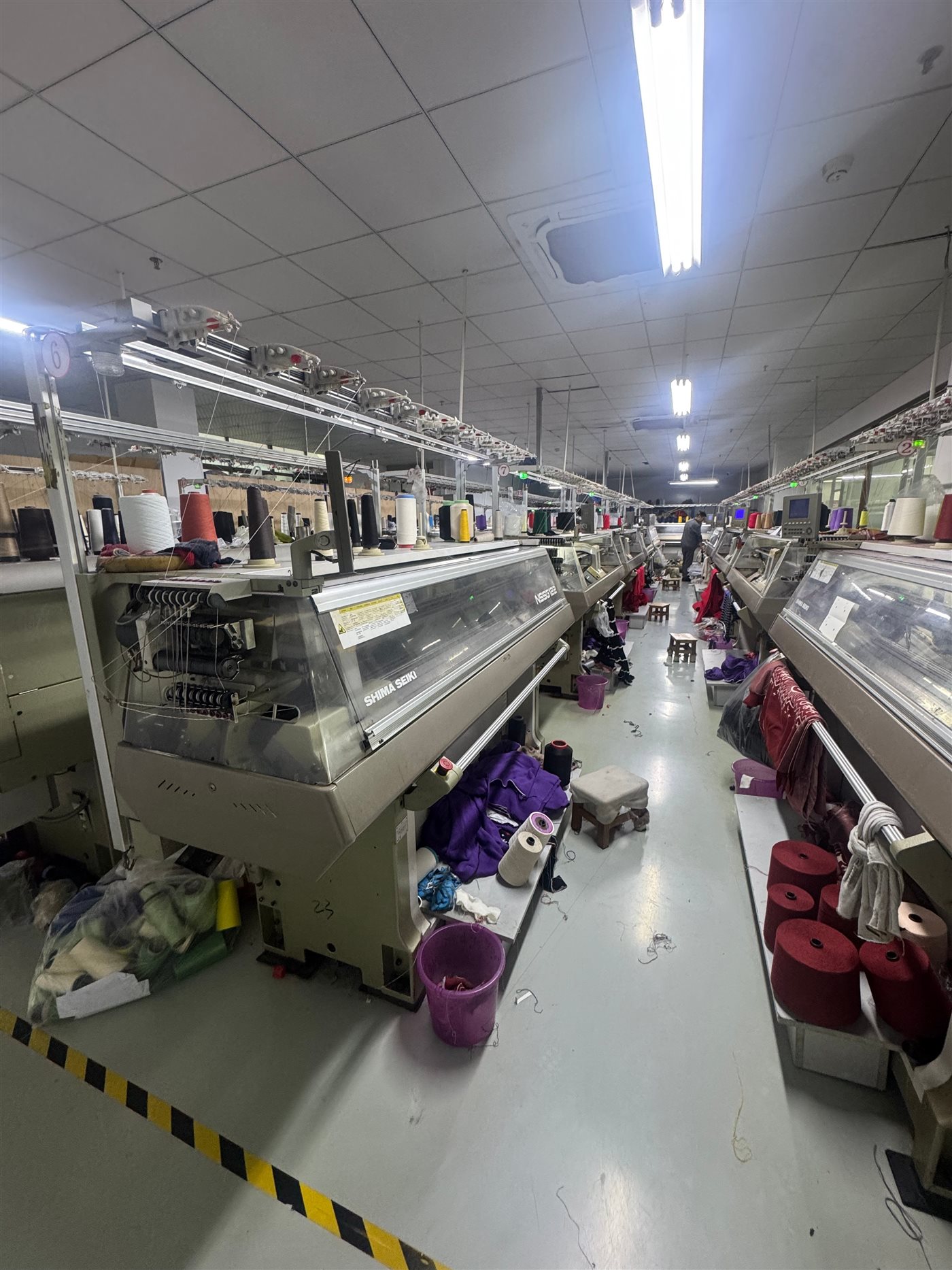
Shima Seiki and Stoll, on the floor.
Our flat-bed floor runs Japanese machines. It is the reason we can quote intarsia, multi-colour jacquard, cables and shaped panels from the same workshop — and the reason an approved sample and the bulk run come off the same program.
What they give us
- 01
Needle selection you can rely on
Every needle is selected individually, so a multi-colour jacquard or a shaped armhole knits exactly as programmed — piece after piece, not just on the sample.
- 02
Carrier control and even tension
Multiple yarn carriers with programmable takedown keep tension consistent across a wide bed. That is the difference between a swatch you approve and a bulk run that measures the same.
- 03
One file, sample to bulk
Patterns are compiled in SDS-ONE / M1plus, so the sample and the production run are knitted from the same program instead of being re-entered by hand.
- 04
Structures, not just stitches
Stitch transfer between beds lets us knit ribs, cables, pockets, collars and fully fashioned panels rather than cutting and sewing them in afterwards.
- 05
Uptime over long runs
The beds hold their settings through long shifts — what matters when the last piece of a 3,000-piece run has to measure like the first.
Imported vs domestic
Domestic flat-beds have closed much of the gap on plain knits, and on price and delivery they are hard to beat. The difference shows up on complex structures, fine gauges and long runs where consistency decides the order.
A qualitative comparison based on general trade experience, not a machine test report — real capability depends on model, gauge and configuration.